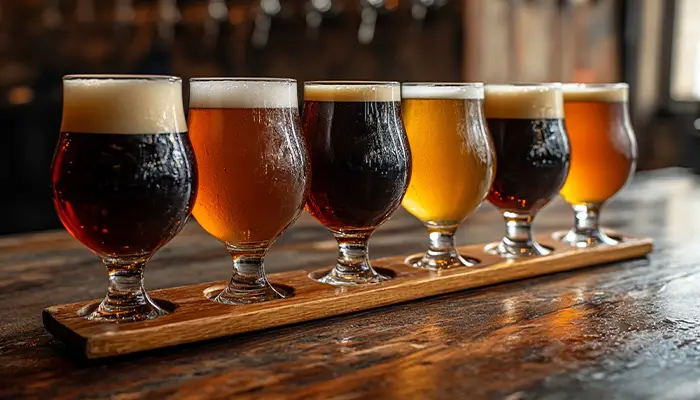
In the world of beer, there are two basic categories: ales and lagers. In the world of craft beer, especially Texas craft beer, ales take the main stage.
What Is the Difference Between a Lager and an Ale?
The main difference between beer types starts with the yeast used for fermentation. Ale is fermented in warmer temperatures with top-fermenting yeast. Lager is fermented at cooler temperatures with bottom-settling yeast and takes longer to mature, usually under refrigeration.
Basic Ale Varieties
Historically, all beer was a form of ale. Modern craft beer revives many old-world styles. Ales are typically higher in alcohol content, which is why lagers are often considered lighter or “soda-like” in comparison.
- American Pale Ale (APA): Medium hop bitterness with fruity, citrus, and piney aromas. Medium body and maltiness with moderate alcohol. Best served at 45–55°F in a tulip glass.
- India Pale Ale (IPA): Bold hoppy bitterness, flavor, and aroma. Best served at 50–55°F in a tulip glass.
- Hefeweizen (Wheat Ale): Straw to amber-colored ale with at least 50% malted wheat. German in origin with aromas of banana and clove. Low acidity, medium alcohol, and highly carbonated with a long-lasting head. Best served at 40–45°F in a hefeweizen glass.
- Brown Ale: Medium brown color, medium hoppiness, and medium alcohol. Notes of roasted malt, caramel, and chocolate. Best served at 50–55°F in a nonic pint.
- Stout: Rich and malty with caramel, chocolate, and coffee flavors and a slightly bitter finish. Medium to high alcohol. Best served at 50–55°F in a nonic pint.
- Sour Ale: Open-fermented beers using wild yeast. Unique layered flavors, often balanced with fruity sweetness. Popular among both beer enthusiasts and newcomers. Serve as recommended by the brewer.
Basic Lager Varieties
Lager originated in the 1500s when German monks fermented beer in cold caves using specific yeast strains. Lagers are now the most widely consumed beers globally, known for being light and effervescent.
- American Lager: Gold-colored, crisp, low alcohol, and carbonated. Best served at 40–45°F in a pint glass.
- Pilsner: Pale lager with hoppy bitterness and a malty sweet finish. Best served at 40–45°F in a pilsner glass.
- Bock: Dark brown lager with high malt character and light toast aroma. Medium alcohol, malt-forward. Best served at 45–50°F in a pilsner glass.
- Marzen/Oktoberfest: Bronze to copper lager brewed in March, aged over summer, rich in malty flavor. Best served at 45–50°F in a stein.
- Dunkel: Light to dark brown German-style lager with deep malt flavors, hints of nuts, chocolate, and caramel. Best served at 45–50°F in a stein.
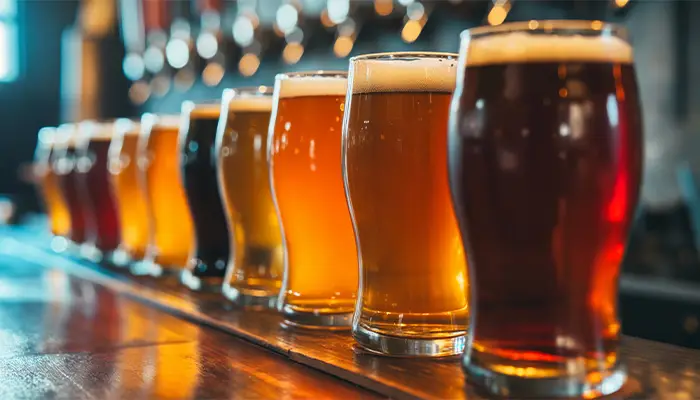
Expanding Your Craft Beer Knowledge
The world of beer is vast and diverse. This guide offers a foundational understanding of ale and lager varieties. Taking the time to explore these styles will give you a strong appreciation for Texas craft beer and help you discover your favorite flavors.
If you’re ready to explore these styles for yourself, Texas Liquor is your go-to destination for the best selection of Texas craft beer. Visit our Texas Craft Beer page to discover new releases, local favorites, and seasonal brews. Near Victoria, Nursery, or Port O’Connor? Stop by any of our four convenient locations and let our team help you find your next favorite craft beer. Cheers to discovering something new!